1. Why Sealing Matters for Bearings
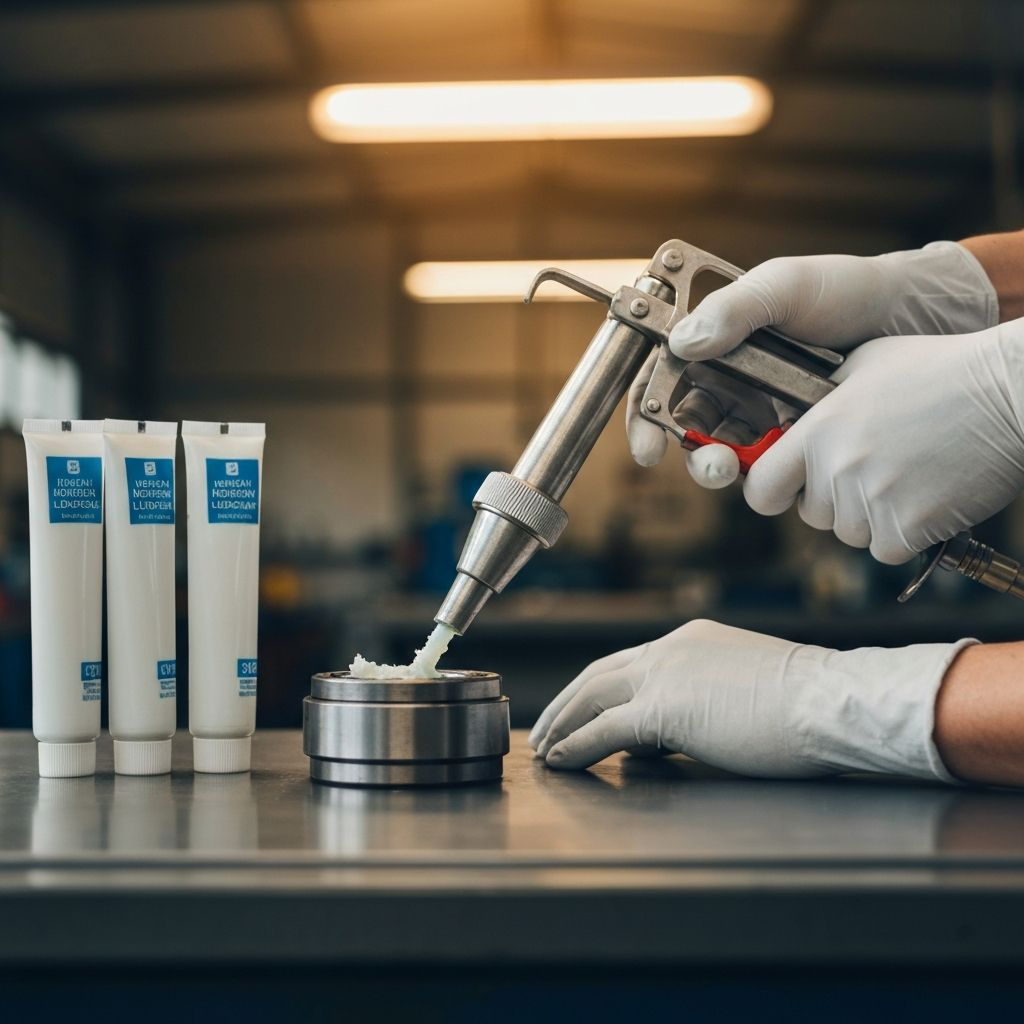
Contamination is the leading cause of premature bearing failure, responsible for an estimated 14% of all bearing failures according to SKF research. Dust, water, chemical vapours, and process fluids penetrate the bearing housing, degrade lubricant, score raceways, and accelerate wear. Effective sealing is the first line of defence.
SMS Bearings provides a comprehensive range of sealing solutions from SKF and FAG to protect rotating equipment across the UAE's demanding industrial landscape.
2. How Seals Work
Seals create a barrier between the protected bearing environment (clean lubricant) and the external environment (dust, water, chemicals). They achieve this through physical contact, tortuous paths, centrifugal action, or pressure differentials -- often combining multiple mechanisms for maximum protection.
3. Contact vs Non-Contact Seals
| Factor | Contact Seal | Non-Contact Seal |
|---|---|---|
| Mechanism | Lip touches shaft | Tortuous path / gap |
| Friction | Generates heat | Zero friction |
| Wear | Lip and shaft wear | No wear |
| Speed limit | ~12-15 m/s surface velocity | Unlimited |
| Sealing effectiveness | Excellent (liquids & solids) | Good for solids, moderate for liquids |
| Lifespan | Limited (depends on wear) | Unlimited (no wearing parts) |
4. Oil Seals (Radial Lip Seals)
Oil seals feature a flexible lip (typically nitrile NBR or fluoroelastomer FKM) that maintains contact with the rotating shaft. A garter spring behind the lip ensures consistent sealing pressure as the lip wears.
Applications: Gearbox input/output shafts, hydraulic cylinders, automotive engines, pumps.
Limitations: Maximum shaft surface velocity of approximately 12-15 m/s; generates friction heat; lip wears over time creating a groove on the shaft.
5. Labyrinth Seals
Labyrinth seals create a series of interlocking grooves between the rotating and stationary components. Contaminants must navigate this tortuous path, losing energy at each turn. No contact means zero friction, zero wear, and unlimited life.
Applications: High-speed electric motors, turbo machinery, process fans, paper mill dryer sections.
Enhancement: Grease-filled labyrinth grooves provide additional resistance to fine dust and moisture -- highly recommended for UAE desert environments.
6. V-Ring Seals
V-ring seals are all-rubber seals that stretch onto the shaft and rotate with it. The flexible lip seals axially against a stationary surface (typically the housing face or end cover). Simple, effective, and easy to install.
Applications: Conveyor idler bearings, pillow block housings, agricultural machinery, ventilation fans.
7. Flinger Seals (Slinger Seals)
Flingers are metal discs press-fitted onto the shaft that use centrifugal force to throw contaminants away from the seal area. Often used as the outermost defence in multi-seal arrangements.
8. Felt & Strip Seals
Simple felt rings or labyrinth strip seals provide basic dust exclusion in low-speed, low-contamination environments such as conveyor take-up frames and lightly loaded fan bearings.
9. Seal Comparison Table
| Seal Type | Contact | Max Speed | Dust | Water | Pressure | Life |
|---|---|---|---|---|---|---|
| Oil seal (lip) | Yes | 12-15 m/s | Excellent | Excellent | 0.05 MPa | Limited |
| Labyrinth | No | Unlimited | Good | Moderate | None | Unlimited |
| V-ring | Yes (axial) | 8-12 m/s | Good | Good | None | Moderate |
| Flinger | No | Unlimited | Moderate | Good | None | Unlimited |
| Felt ring | Yes | 4 m/s | Basic | Poor | None | Limited |
10. Seal Material Guide
| Material | Abbreviation | Temp Range | Best For |
|---|---|---|---|
| Nitrile rubber | NBR | -40 to +100 deg C | General industrial, mineral oils |
| Fluoroelastomer | FKM / Viton | -20 to +200 deg C | High temperature, aggressive chemicals |
| PTFE | PTFE | -200 to +250 deg C | Extreme temps, chemical resistance |
| Silicone | VMQ | -60 to +200 deg C | Food-grade, wide temperature range |
| EPDM | EPDM | -50 to +150 deg C | Water, steam, brake fluids |
11. Seal Selection Criteria
Selecting the right seal requires balancing several factors:
- Shaft speed -- high-speed applications demand non-contact seals; low-speed can use contact seals.
- Contamination type -- dust vs water spray vs chemical splash determines seal material and design.
- Temperature -- NBR to 100 deg C; FKM to 200 deg C; PTFE to 250 deg C.
- Shaft condition -- worn shafts reduce lip seal effectiveness; consider SKF SPEEDI-SLEEVE.
- Pressure differential -- standard lip seals handle up to 0.05 MPa; reinforced versions to 0.3 MPa.
12. Multi-Barrier Sealing Strategy
For challenging UAE conditions, a single seal is rarely sufficient. Best practice is a multi-barrier approach:
Flinger or labyrinth seal to deflect gross contamination.
Grease-filled gap that traps fine particles.
Contact lip seal immediately adjacent to the bearing.
Sealed (2RS) bearings provide the final defence layer.
Combined with proper lubrication management, multi-barrier sealing can extend bearing life by 3-5x.
13. Step-by-Step Seal Selection Guide
What are you sealing against? Dust, water, chemicals, or all three?
Calculate surface velocity: V = pi x d x n / 60,000 (m/s).
Ambient + operational heat. Select seal material accordingly.
Measure surface roughness (Ra 0.2-0.5 um required for lip seals).
Use the comparison table and decision criteria above.
Combine 2-4 seal types for harsh environments.
14. Seal Installation Checklist
15. Inspection & Replacement Checklist
16. Common Seal Failure Modes
| Failure | Symptoms | Cause | Fix |
|---|---|---|---|
| Lip hardening | Cracked, brittle lip | High temperature / chemical attack | Upgrade to FKM or PTFE material |
| Shaft grooving | Wear groove under seal lip | Normal wear over time | Install SPEEDI-SLEEVE or offset new seal |
| Lip inversion | Seal leaks immediately | Incorrect installation direction | Reinstall with lip facing lubricant |
| Extrusion | Seal material pushed through gap | Excessive pressure differential | Use reinforced seal or add back-up ring |
17. Sealing in UAE Conditions
UAE's desert dust (silica particles as fine as 5 microns), coastal salt spray, and extreme heat create one of the world's most challenging sealing environments.
- Use FKM (Viton) seal materials as standard for outdoor equipment -- NBR degrades rapidly above 100 deg C.
- Specify multi-barrier sealing for all outdoor rotating equipment -- single seals fail quickly.
- For coastal plants (Abu Dhabi, RAK), add corrosion-resistant shaft sleeves and stainless steel housing components.
- Inspect seals monthly during summer -- heat accelerates rubber degradation.
- Use positive air pressure purge systems in the housing for critical equipment in extremely dusty environments (quarries, cement plants).
18. Sealing Brands We Supply
| Brand | Products | Page |
|---|---|---|
| SKF | Oil seals (HMS5, HMSA10), V-rings, SPEEDI-SLEEVE, Taconite seals, end covers | View SKF |
| FAG (Schaeffler) | Bearing housing seals, complete seal kits | View FAG |
19. Pro Tips
20. Key Takeaways
- Contamination causes 14% of bearing failures -- effective sealing is essential.
- Contact seals (oil seals) for slow-speed positive sealing; non-contact (labyrinth) for high speed.
- Multi-barrier approach is mandatory for UAE desert and coastal environments.
- FKM material is the minimum standard for outdoor equipment in the UAE heat.
- Always install seals with the lip facing the lubricant side.
- Replace seals whenever you open a bearing housing for maintenance.
- SMS Bearings stocks SKF and FAG sealing solutions for immediate delivery across the UAE.
21. Explore Sealing Products from SMS Bearings
Browse our full sealing solutions range including oil seals, V-rings, labyrinth seals, and bearing housing seal kits, or contact our engineering team for a sealing system review.
Looking for Sealing Solutions products?
Browse our full catalogue with technical specifications.
Frequently Asked Questions
Expert answers about sealing solutions from our engineering team.